|
|
|
Web server
This server hosts the HTML files as well as the frontend program (CGI program)
which accesses
the
database. All internet connection is done by this server. Protected by SSL
protocol.
|
Database server
This server records and
hosts all database (RDBMS) information. All customer information is stored and
hosted on this server. The database server is connected to the web server by a
local area LAN connection, using a different IP address. Therefore, direct
access from the internet is not possible.
|
Backup server
This is the backup server
for the database server. Backups are run automatically to allow
data
restoration in case of a system breakdown. The backup server is
connected to the database server by a local IP address. Therefore, direct access
from the internet is not possible. |
1. When making a purchase from JPstores, your
personal data is sent from your computer to our web server. The information is
secured by SSL encryption.
|
2. When arriving at our web server, your personal
data is decoded by our frontend (CGI) program. After this, it is stored on the
database server. Because the web server and the database server are connected by
a local connection data transfer between them is secure.
|
3. Whenever your personal data is used (i. e. for
your personalized My Page) it is requested from the database server by programs
on the web server, but in no case stored there. When your personal data is sent
to your computer (i. e. for your personalized My Page) it is always secured by
SSL encryption.
|
4. The data server (2) and the backup server (3)
are not directly connected to the internet. This setup
protects your data
from theft. |
|
| Secure Sockets Layer (SSL) |
|
The Secure Sockets Layer (SSL) (and TLS) protocol is the Web standard for
encrypting communications between users and SSL e-commerce sites. Data
sent via an SSL connection is protected by encryption, a mechanism that
prevents eavesdropping and tampering with any transmitted data. SSL provides
businesses and consumers with the confidence that private data sent to
a Web site, such as credit card numbers, are kept confidential. Web server
certificates (also known as secure server certificates or SSL certificates)
are required to initialize an SSL session.
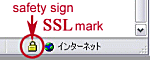
Customers know when they have an SSL session with a website when their browser displays the little gold padlock and the address bar begins with a https rather than http. SSL certificates can be used on webservers for Internet security and mailservers such as imap, pop3 and smtp for mail collection / sending security. |
|
|
|
|